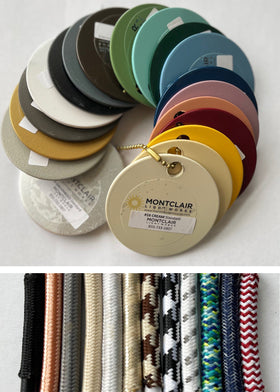
Stem hung pendant lights are designed to bring focused, downward illumination to spaces that benefit from a fixed light position. Unlike cord or chain-hung alternatives, a stem hung pendant uses a rigid vertical rod to maintain the shade at a consistent height and alignment, providing clean sightlines and dependable light placement.
At Montclair Light Works, each stem hung light fixture is handcrafted in the USA with durable materials and attention to balance and proportion. These pendant lights are commonly used over kitchen islands, dining tables, workspaces, and commercial counters where reliable overhead lighting is essential.

Stem Hung Pendant
Frequently Asked Questions
A stem hung pendant uses a fixed metal rod (downrod) instead of a cord or chain. This keeps the fixture stable and aligned, giving it a more structured appearance compared to corded pendants, which offer flexibility but may move over time.
They are commonly installed over kitchen islands, dining tables, and work surfaces where consistent light placement is important. The fixed structure helps maintain even spacing and a clean visual line across the space.
Height depends on ceiling height and placement. For most applications, the fixture should hang low enough to provide focused light but high enough to avoid obstructing views. Adjustable stem lengths help achieve the right balance.
Yes, many models are designed for outdoor or damp locations. These are suitable for covered areas like porches, patios, and entryways. Always check the fixture’s rating to ensure it is appropriate for exterior use.
Many stem hung pendants from Montclair Light Works include integrated LED with adjustable color temperature (2700K–3500K). This allows you to choose between warmer and more neutral light depending on the setting.
Most fixtures are dimmable when paired with a compatible dimmer. This allows you to adjust brightness levels for different needs, from task lighting to softer ambient lighting.
This depends on the size of the island and the fixture design. In most cases, two to three pendants are used to create even spacing and balanced illumination without overcrowding the space.