Key Takeaways
- High-quality light fixtures are built from solid metals (brass, steel, aluminum) rather than thin pot-metal or plastic, and they feel noticeably heavier for their size.
- A real finish is applied evenly with no thin spots, drips, or exposed base metal at seams and joints — spun or hand-finished shades show consistent thickness and clean edges.
- Look for a UL or ETL listing mark; both are tested to the same luminaire safety standard (UL 1598) and carry equal legal weight under OSHA’s NRTL program.
- Craftsmanship shows in smooth welds, tight threaded joints, cleanly wired sockets, and hardware that lines up — not glue, rattles, or gaps.
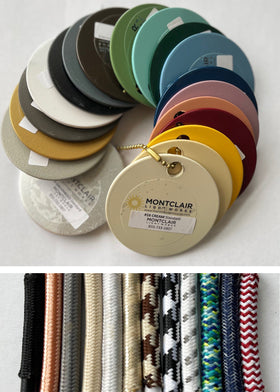
- Ordering a physical finish and cord sample is the most reliable way to judge material and color quality before you commit to a fixture.
Start With the Metal: Why Construction Material Is the First Quality Signal
The single most reliable sign of a high-quality light fixture is solid-metal construction. Premium fixtures are built from brass, steel, or aluminum, while budget pieces lean on thin "pot metal," zinc alloy, or painted plastic that flexes under light pressure.
Solid metals matter for two reasons: they hold their shape over decades, and they give the finish something durable to bond to. A cast or spun brass shade resists denting and keeps its silhouette; a stamped, paper-thin shell picks up dings during shipping alone.
You can feel the difference before you read a single spec. Pick the fixture up. A quality piece has what most makers call "heft" — a density that signals real material rather than a hollow shell. Weight is not a perfect proxy, but a sconce that feels suspiciously light for its size is worth a second look.
Run a finger along the inside edge of a shade or the back of a backplate. Smooth, evenly rolled edges point to careful metalwork; sharp burrs and raw stamped edges point to corners being cut. This is exactly the kind of detail that separates fixtures designed to last from ones designed to hit a price.
Material choice also shapes where a fixture can safely live. Aluminum and treated steel handle damp and wet locations better than untreated alloys, which is why outdoor-rated pieces specify their metals and coatings. If you want to see how a single design reads across different metals and colors before buying, ordering a finish and cord sample set is the easiest way to compare in person. For a broader view of what defines premium pieces overall, our Complete Luxury Lighting Buying Guide covers the category in depth.
Reading the Finish: What a Premium Coating Actually Looks Like
A high-quality finish is even, fully opaque where it should be, and consistent across every surface — including the parts you don’t see at first glance. Finish is where cost-cutting hides, because a thin or rushed coating can look fine in a product photo and fail within a year in real light.
Check the transitions first. Look at seams, welds, threaded joints, and the underside of arms. On a well-made fixture the finish carries cleanly around these areas; on a cheaper one you’ll spot thin patches, drips, or bare base metal peeking through at the edges.
Powder-coating and baked-enamel finishes, done properly, resist chipping and yellowing far better than a quick spray. Hand-applied and living finishes (like raw or waxed brass) behave differently — they’re meant to patina over time — so "perfectly uniform forever" isn’t the goal there; consistency at the point of sale is.
Color depth is another tell. Premium finishes read as rich and slightly dimensional rather than flat and chalky. The mistake we see most often is judging a finish from a screen, where lighting and monitor calibration distort the actual color and sheen.
This is one area where samples beat photos every time. Montclair Light Works publishes its full range on the available finishes page, and seeing two or three candidates side by side under your own room’s light usually settles the decision faster than hours of scrolling. If you’re weighing a custom color, our product customization options walk through how finishes apply across a build.
Handspun and Handcrafted Shades: How Real Craftsmanship Shows Up
Handspun and hand-finished shades reveal quality through consistency: even wall thickness, a true circular profile, and clean rolled edges with no waviness or tool chatter. Spinning metal over a form is a skilled process, and the results are visible to anyone who knows to look.
Hold a shade up and sight down its edge. A quality spun shade traces a smooth, continuous curve; a poorly made one shows flat spots, ripples, or an out-of-round rim. The lip should be rolled or finished so it feels safe to the touch, not left as a cut edge. Layered spun forms like the Rosie 10" LED pendant or the domed June Bug 18" pendant make this easy to see — the stacked profiles only look right when each curve is spun true.
Symmetry carries through to assembly. On a well-built fixture, the shade sits square to the backplate or stem, sockets center properly, and any decorative rings seat flush. When parts are slightly off-axis or need forcing to line up, that’s a manufacturing shortcut you’ll keep noticing after installation.
There’s a reason handcrafted lighting commands a premium, and it isn’t just marketing. Made-to-order and small-batch production allows a maker to inspect each piece rather than pass thousands off a line. Montclair Light Works, for example, designs and manufactures in the USA, which is part of how customization stays practical — you can read the background on the About Us page.
If you’re new to the idea of built-to-spec lighting, our explainer on What Is Custom Lighting? lays out what "handcrafted" and "made-to-order" actually change about the final product, from finish options to how a fixture is wired for your space.
Safety Marks That Matter: UL, ETL, and What the Ratings Mean
A genuine safety listing — UL or ETL — is non-negotiable in a high-quality fixture, and both marks are equally valid. They indicate the fixture was tested by a Nationally Recognized Testing Laboratory against the same luminaire safety standard, UL 1598, the North American safety standard for luminaires.
Underwriters Laboratories (UL) is the name most people recognize, but the ETL mark, issued by Intertek (the lab behind the ETL mark), tests to the identical standards. Under U.S. federal law (29 CFR 1910.7), certifications from any OSHA-recognized NRTL carry the same legal authority — so an ETL-listed fixture is not a "lesser" product than a UL-listed one.
Just as important is the location rating printed alongside the mark. Fixtures are listed for dry, damp, or wet locations, and matching that rating to the room is a safety issue, not a preference. A damp-rated sconce belongs near a covered porch or bath, while a wet-rated fixture can take direct rain.
Missing marks should give you pause. Electricians and inspectors can refuse to install unlisted fixtures, and some insurers treat a fire traced to an unlisted product less favorably. For most practitioners, the listing is a baseline filter — no mark, no purchase.
You can usually find the listing on a label at the fixture’s base, canopy, or inside the shade, and reputable makers state it plainly in the product details. If a spec page is silent on safety listing and location rating, treat that silence as information. Montclair Light Works notes ratings on its products and outlines maintenance expectations on the Warranty & Care policy page.
The Details Under the Hood: Wiring, Sockets, and Hardware
High-quality fixtures are as well-built inside as out, with clean wiring, solid sockets, and hardware that threads together without play. The internals are where safety and longevity actually live, even though buyers rarely inspect them.
Good wiring is neatly routed and properly insulated, with no exposed copper at the terminals and no wires pinched against sharp metal edges. Sockets should feel firmly anchored, not loose in their housing, and rated for the wattage and bulb type the fixture calls for.
Threaded joints and mounting hardware tell a quiet story. On a premium piece, stems screw together smoothly and stop where they should; canopies and backplates sit flat against the wall or ceiling. Rattles, cross-threading, and gaps that need extra washers to hide are all signs of loose tolerances.
Cords and cord grips deserve a look too. A fabric-wrapped or well-jacketed cord with a proper strain relief handles daily use better than a thin, unsecured lead. This matters most on pendants and plug-in pieces, where the cord is both structural and visible — browse a range of cord-hung pendants to see how cord quality reads in person.
None of this requires an electrician’s training to assess. If the visible hardware is precise and the wiring looks tidy through the canopy, the parts you can’t see were probably held to the same standard. Sloppy visible assembly is a fair predictor of sloppy hidden assembly.
Materials at a Glance: A Quick Quality Comparison
Not every material suits every room, and "high-quality" partly depends on matching the metal and finish to where the fixture will live. The table below summarizes how common fixture materials compare on durability, typical use, and what to watch for.
|
Material
|
Durability
|
Best For
|
What to Watch For
|
|
Solid brass
|
Excellent; ages gracefully
|
Interior feature pieces, living finishes
|
Confirm solid vs. brass-plated
|
|
Steel (treated/coated)
|
High; strong and rigid
|
Wall lights, structural arms, outdoor
|
Coating quality at welds and edges
|
|
Aluminum
|
High; naturally corrosion-resistant
|
Damp/wet and outdoor fixtures
|
Thin-gauge stamping feels flimsy
|
|
Zinc / "pot metal" alloy
|
Low to moderate; can be brittle
|
Budget decorative pieces
|
Cracking, pitting, finish flaking
|
|
Plastic / resin
|
Low; flexes and yellows
|
Very low-cost or purely decorative
|
Not for heat- or moisture-heavy spots
|
Two takeaways cut across the whole table. First, solid metals reward you over time in a way plated or coated alloys usually can’t, especially in damp and outdoor settings. Second, the finish and the base material work as a system — a great finish on weak metal still dents, and great metal with a rushed finish still corrodes at the weak points.
Price tracks these differences, though not perfectly. A higher price doesn’t guarantee solid construction, but genuinely solid-metal, properly finished, safety-listed fixtures rarely sell at bargain-bin prices, because the materials and labor cost real money. When a deal looks too good for what’s described, the gap is usually made up in thinner metal, a cheaper finish, or a missing listing.
If you want to pressure-test all of this against actual pieces, our best-selling fixtures collection is a practical place to compare weights, finishes, and ratings, and the full lighting collections index shows how one design translates across many looks.
Where Quality Pays Off: Matching the Fixture to the Room and the Long Run
Quality matters most where a fixture works hardest — entryways, kitchens, baths, and outdoor spots that see heat, moisture, and daily switching. In those places, the difference between a well-made fixture and a cheap one shows up in months, not years.
Think about lifespan honestly. A budget fixture can look acceptable on day one, but loose sockets, flaking finish, and yellowing shades tend to arrive together once the piece has cycled through enough real use. Replacing it — plus the labor to swap it out — often costs more than buying well once.
There are real trade-offs worth naming. Solid-brass and hand-finished pieces cost more up front and, in the case of living finishes, will change appearance over time. That’s a feature for some buyers and a drawback for others; the key is knowing which you’re choosing rather than being surprised later.
High-traffic and luxury spaces are where premium construction earns its keep most clearly. If you’re outfitting a whole home or a signature room, our guide to Ultimate Guide to Custom Lighting for Luxury Homes works through fixture selection room by room, including where to spend and where you can ease off.
The most dependable way to buy well is to reduce guesswork before you commit. Judge the metal by weight and edges, judge the finish in person, confirm the safety and location rating, and inspect the visible hardware. Do those four things and you’ve filtered out the large majority of low-quality fixtures on the market.
FAQ
How can you tell if a light fixture is good quality?
You can tell a light fixture is good quality by checking four things: material, finish, safety listing, and assembly. Solid metals like brass, steel, or aluminum feel heavier and hold up longer than thin alloy or plastic. A premium finish is even and consistent, with no drips, thin spots, or exposed base metal at seams. Look for a UL or ETL listing that matches the room’s location rating (dry, damp, or wet). Finally, inspect the visible hardware and wiring: smooth threaded joints, firmly seated sockets, and neat, insulated wiring signal careful construction. If all four check out, the fixture is very likely well made.
Does a heavier light fixture mean better quality?
A heavier light fixture usually indicates better quality, but weight alone is not proof. Solid metals such as brass and steel are denser than the thin pot-metal, zinc alloy, or plastic used in budget fixtures, so a quality piece often feels substantial for its size. That said, some good designs are genuinely light because they use minimal thin-gauge aluminum by design, and some cheap fixtures add weight in the wrong places. Use weight as one signal among several — combine it with checks on finish consistency, the smoothness of shade edges, and the presence of a UL or ETL safety mark before deciding.
What does a UL or ETL listing mean on a light fixture?
A UL or ETL listing means an independent, OSHA-recognized testing laboratory has verified the fixture against the North American luminaire safety standard, UL 1598. UL (Underwriters Laboratories) and ETL (issued by Intertek) test to the same requirements, and under U.S. federal law both marks carry equal legal authority — neither is a lesser certification. The listing also comes with a location rating: dry, damp, or wet. Matching that rating to where you install the fixture is a genuine safety requirement, not a preference. Electricians and inspectors may refuse to install unlisted fixtures, so treat a missing mark as a reason to walk away.
What materials make the highest-quality light fixtures?
The highest-quality light fixtures are typically made from solid brass, treated or coated steel, and aluminum. Solid brass is prized for durability and its ability to age into an attractive patina. Steel offers rigidity and strength for arms and structural parts. Aluminum resists corrosion naturally, which makes it a strong choice for damp and outdoor fixtures. Lower-quality pieces rely on zinc "pot metal" alloys or plastic, which flex, crack, or yellow over time. Just as important as the base metal is the finish applied to it — the two work as a system, so a quality metal with a rushed finish will still fail at the weak points.
Are handmade or handspun light fixtures better than mass-produced ones?
Handmade and handspun light fixtures are often better built than mass-produced ones because small-batch and made-to-order production allows each piece to be inspected rather than passed off a high-speed line. Handspun metal shades, when done well, show even wall thickness, a true round profile, and clean rolled edges. Handcrafting also makes customization practical, so finishes, sizes, and wiring can be tailored to a space. The trade-off is cost and lead time: handcrafted pieces usually cost more and take longer to produce than stock inventory. For high-traffic or signature spaces, most buyers find that the build quality and the customization options justify the added premium.
Why do high-quality light fixtures cost more?
High-quality light fixtures cost more because solid metals, durable finishes, safety testing, and careful assembly all add real material and labor expense. Solid brass or steel costs more than thin alloy; a properly baked or powder-coated finish takes more steps than a quick spray; and UL or ETL testing carries certification costs. Made-to-order and USA-made production also allow per-piece inspection, which mass production sacrifices for speed. A higher price does not automatically guarantee quality, but genuinely solid, well-finished, safety-listed fixtures rarely sell at rock-bottom prices. When a fixture looks too cheap for what it claims to be, the savings usually come from thinner metal, a weaker finish, or a missing safety listing.